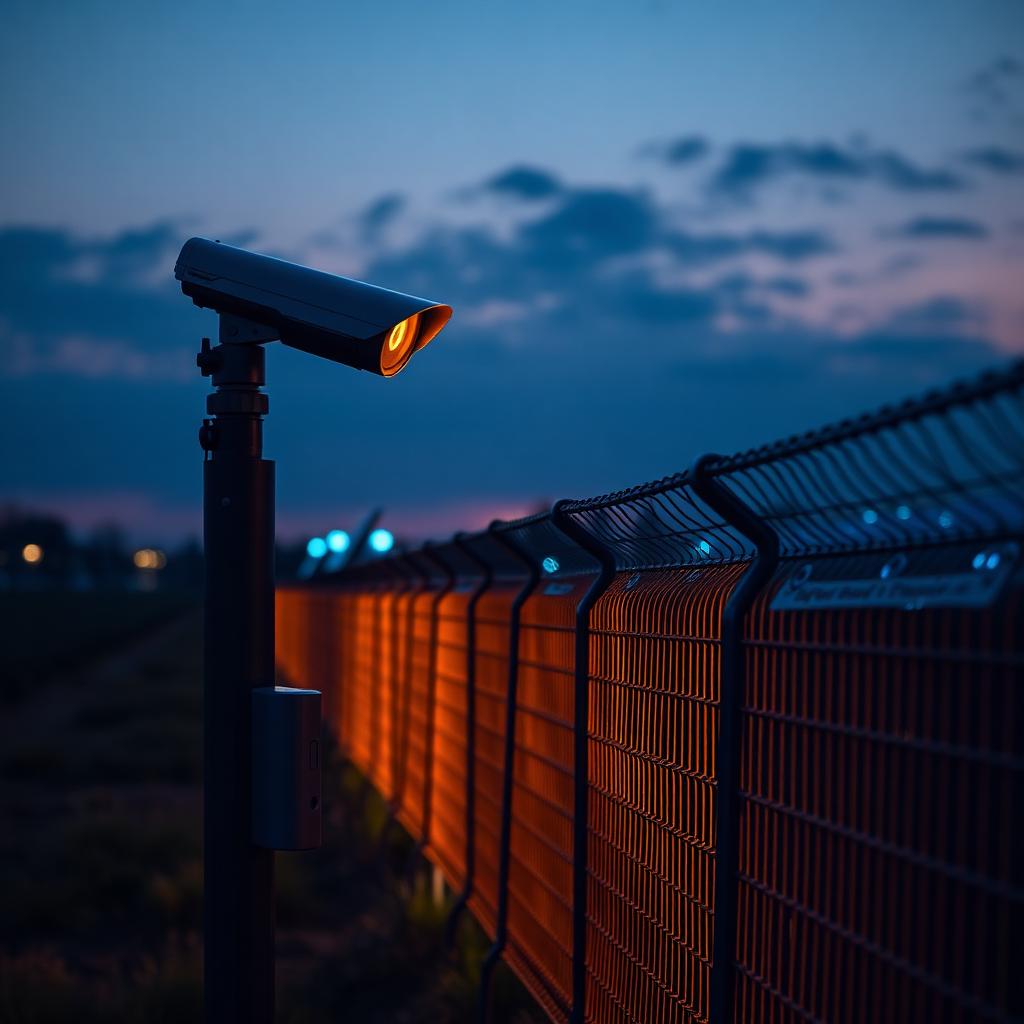
What is solar farm perimeter CCTV?
Perimeter CCTV is the layer that detects intruders at the boundary of a solar farm, not at the asset. Rather than pointing cameras at the substation and hoping to catch someone on the way out, perimeter CCTV covers every metre of the fence line with thermal detection, AI-classified alarms and live audio challenge — the difference between preventing an incident and documenting it.
On a solar farm this matters more than almost any other site type. Perimeters run for kilometres, mains lighting is rare and there is no one on site after dark. Dome cameras above the substation gate are useless against a crew cutting a fence three fields away. Detection at the boundary is the only model that works.
Why perimeter-first design wins on solar farms
Solar farms invert every assumption behind commercial CCTV — long perimeters, no lighting, unmanned. Perimeter-first design solves it.
Long rural perimeters
Solar farms have kilometres of fence — asset-only cameras cannot cover it.
Detect at the boundary
Catch intruders before they reach cabling, inverters or BESS.
Verified in seconds
Every alarm classified and confirmed before escalation to police.
Insurance-grade
BS 8418-aligned detection unlocks better cover and premiums.
The layers of a solar farm perimeter CCTV system
A proper perimeter CCTV system is more than one type of camera. We combine four proven layers that reinforce each other and eliminate single points of failure.
Thermal detection
Long-range thermal cameras detect body heat and vehicles in total darkness, fog and glare — the first line of defence at the fence line.
- 150–400m detection range per pole
- Works through fog, smoke, dust and heavy rain
- Distinguishes human signatures from wildlife
- Dual thermal + visible channels for evidential video
AI classification
Deep-learning analytics classify every event as human, vehicle, animal or environmental — filtering out the noise that overwhelms unfiltered systems.
- Human and vehicle classification at the edge
- Loitering, line-cross and intrusion-zone rules
- Filters wildlife, weather and blowing debris
- Behaviour analytics for repeat reconnaissance
PIDs & laser scanners
Perimeter intrusion detection devices, LiDAR curtains and laser scanners create an electronic tripwire that raises the alarm before the fence is breached.
- Wireless, battery-powered fence sensors
- GJD, Optex Redscan and Raytec integrations
- Detects cutting, climbing, lifting and vibration
- Triggers PTZ, lighting and audio challenge instantly
Integrated audio challenge
Site-wide speaker arrays let the monitoring centre issue a live, personalised warning the moment an intrusion is verified — most intruders leave immediately.
- Personalised live warnings from the ARC
- Reference clothing, location and vehicles
- Coverage across every perimeter zone
- Pre-recorded challenges available for hands-free deterrence
Surveillance cameras protecting your solar farm's boundaries
Different boundary threats call for different camera technologies. We select and integrate the right sensor for each zone so the perimeter is covered in daylight, darkness and the worst weather.
Thermal cameras
Detect body heat and vehicles through fog, rain and total darkness at ranges up to 400m.
PTZ cameras
Motorised pan-tilt-zoom verification tracks intruders and captures evidential close-ups on demand.
Fixed visible cameras
4K or low-light bullets cover gates, entry points and compound boundaries continuously.
ANPR cameras
Capture number plates at site entrances and access routes for a complete visitor audit trail.
Thermal detection at the fence line
Thermal cameras detect the heat radiated by people and vehicles regardless of light or weather. Pole-mounted along the perimeter with 150–400m detection ranges per unit, they see intruders in absolute darkness, dense fog and heavy rain — the exact conditions when standard cameras fail and most incidents occur. Paired with AI analytics, they trigger alarms only on confirmed human or vehicle targets, so nuisance alarms stay minimal.
How we keep false alarms close to zero
False alarms erode police response and drown out real incidents. We engineer them out in four places along the chain from camera to operator:
Object classification
Filters foxes, birds, livestock and blowing debris at the camera.
Scene rules
Ignores vegetation movement, headlight bloom and known routines.
Pre/post verification
Clip-verified events reach the ARC — never raw motion triggers.
Operator filters
SIA-licensed operators confirm every event before escalation.
Integrating PIDs and solar farm perimeter CCTV systems to improve site security
Perimeter intrusion detection devices and CCTV are stronger together. PIDs sense the earliest signs of a breach, while thermal and PTZ cameras verify the event and deliver a live, targeted response.
Early detection
Fence sensors detect cutting, climbing and lifting before the boundary is crossed.
Visual verification
Thermal and PTZ cameras swing to the alarm zone for instant confirmation.
Audio challenge
Live ARC warnings use PID data to reference exact location and intruder behaviour.
Monitored escalation
Verified alarms flow straight through police URN and keyholder response chains.
Live audio challenge and rapid response
When a real human voice describes what an intruder is doing and where they are standing, the effect is immediate — in most cases the intruder leaves before any damage is done. Audio challenge is issued live from the accredited Alarm Receiving Centre through site-wide speaker arrays, then escalated to police under the site's URN and to keyholders in parallel if the threat continues.
Perimeter CCTV for BESS compounds
Battery energy storage compounds are treated as a higher-priority perimeter within the wider site. Dedicated thermal cameras on the BESS boundary, PTZ verification, internal audio challenge and — where required — integration with fire detection and SCADA give both intrusion protection and early thermal warning for a notoriously high-value, fire-sensitive area.
Power and connectivity around the perimeter
Perimeter CCTV on a solar farm often runs well beyond any mains supply, so power and comms design is critical. We engineer both to be resilient:
- Solar + lithium towers sized for 7+ days of winter autonomy
- Hardwired mains and UPS where the substation is close enough
- Dual-SIM multi-network 4G/5G with automatic failover
- VPN-encrypted backhaul from every device
- Surge protection and lightning arrest as standard
- Mesh radio or fibre for very large estates
Coverage, cost and camera density
The right density of perimeter cameras is a balance of pole spacing, thermal lens choice, mounting height and the site's threat profile. We design for overlapping thermal coverage with no dead zones between poles, then use PTZ verification behind that layer for evidential zoom. That approach delivers genuine 100% perimeter detection at a lower whole-life cost than trying to over- specify individual cameras.
Standards, compliance and insurer requirements
Our perimeter CCTV is designed against BS 8418 for remotely monitored detector-activated CCTV, monitored via a BS 5979 Category II Alarm Receiving Centre and installed to NSI Gold, SSAIB or UL 827 standards. These are the accreditations insurers, lenders and police forces expect on high-value renewable-energy sites, and they are what make eligible sites suitable for a police URN and prioritised response.
Ready to protect your solar farm?
Speak to a solar farm CCTV specialist or request a tailored proposal — no obligation.